
Learning Hub Guide
Insurance Repair Process Explained
A clear guide to the insurance repair process after fire, flood, water ingress or accidental property damage.
Overview
A clear guide to the insurance repair process after fire, flood, water ingress or accidental property damage. This guide provides practical background to help property owners and managers understand the subject, recognise key considerations and decide when professional advice or inspection may be appropriate.
What this guide covers
Make the property safe, notify the insurer and preserve useful evidence.
Go to section →Assessment & scopeSeparate the cause, insured damage and repair specification.
Go to section →Settlement & repairsUnderstand repair, replacement and cash-settlement routes.
Go to section →Completion & recordsCheck reinstatement, evidence and unresolved items before close-out.
Go to section →1. First steps after insured property damage
After fire, flood, escape of water, storm or accidental damage, the first priority is safety and preventing avoidable further loss. Do not enter unsafe areas, interfere with damaged electrics or disturb unstable building fabric. Emergency measures may include isolating a leak, securing an opening or arranging temporary protection, but the exact response depends on the incident.
Notify the insurer as soon as reasonably practical and check the policy instructions before commissioning permanent repairs. Policies differ, so assumptions about what is covered, who may appoint contractors and what authorisation is required can create problems later.
Build an evidence record
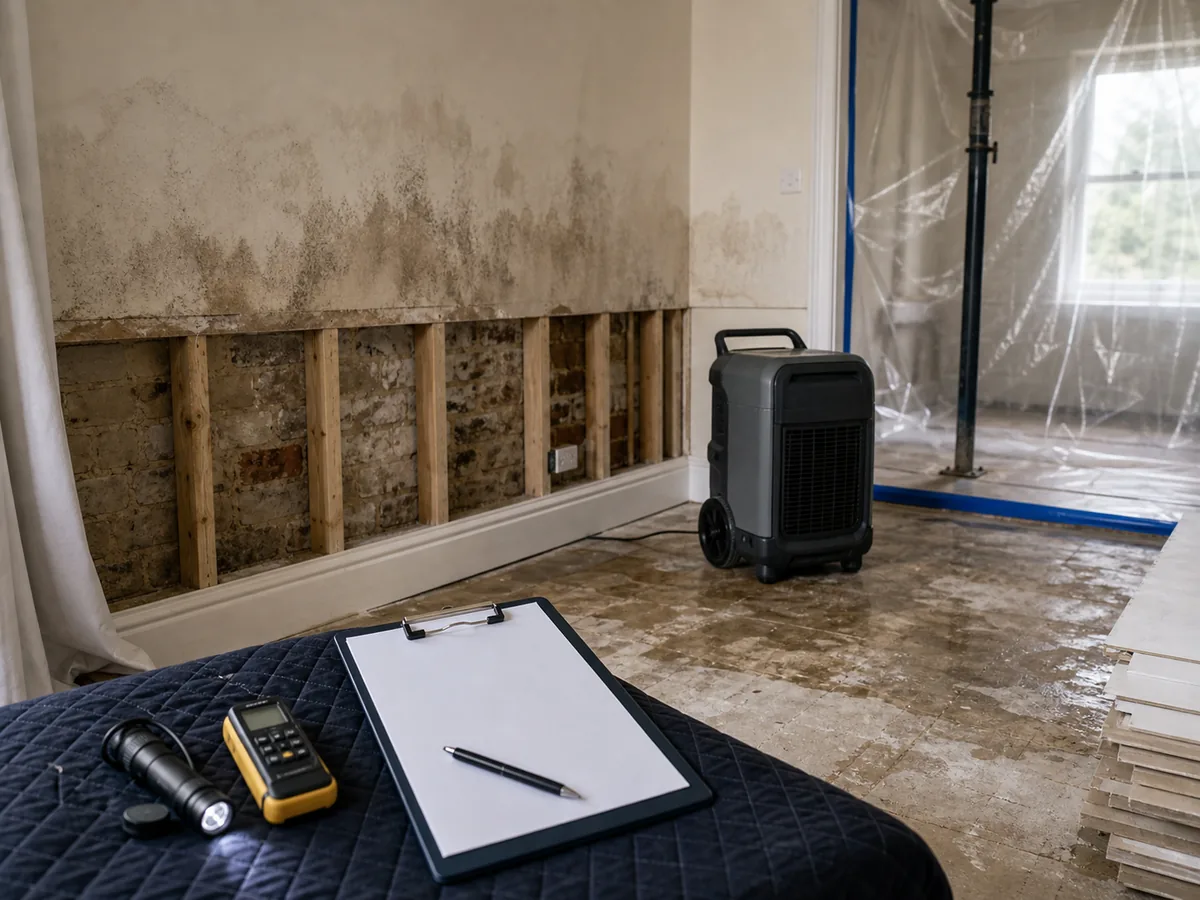
Photograph the damage before unnecessary removal or reinstatement, record dates and circumstances, retain relevant invoices and keep communications together. Where immediate work is necessary for safety, document the condition and the action taken. Evidence can help distinguish the original insured damage from later deterioration or unrelated defects.
Emergency work is not always the final repair
A temporary board, leak isolation or drying measure may be necessary immediately but should not be confused with permanent reinstatement. Record temporary works and make sure the permanent solution remains on the claim or repair schedule.
2. Assessment, cause and repair scope
Before reinstatement, establish what happened and what has actually been damaged. Insurers commonly consider policy wording, cause, exclusions and professional evidence when deciding a claim. The repair scope should distinguish damage caused by the insured event from pre-existing deterioration or maintenance issues.
Inspect beyond the visible finish
Water can travel behind finishes; fire and smoke can affect concealed areas; impact can damage substrates behind apparently minor surface marks. Investigation should be proportionate and evidence-led. Unnecessary strip-out can increase cost, while insufficient investigation can leave hidden damage unresolved.
Agree the scope before major reinstatement
A useful schedule describes removal, drying or cleaning where needed, substrate repair, replacement materials, decoration and associated building work. It should identify assumptions and exclusions. If further damage becomes visible after opening-up, record it and seek the appropriate approval before extending the works.
Keep compliance separate from insurance cover
Insurance cover and construction compliance are different questions. Repair work may still need to satisfy applicable Building Regulations, electrical or gas requirements, CDM duties and other relevant standards even where the insurer is funding the work.
3. Settlement routes and carrying out repairs
Buildings insurers may settle accepted claims by arranging repair, replacing damaged items or making a cash payment, depending on the policy and circumstances. The Financial Ombudsman Service notes that policy wording commonly gives insurers choices over settlement method and that an insurer-arranged repair should provide an effective and lasting repair.
Insurer-appointed or policyholder contractor
Some claims are handled through an insurer’s repair network; others involve quotations from the policyholder’s own contractor. Before appointing anyone, establish who is authorising and paying for the work, what scope has been accepted, how variations will be dealt with and who is responsible for completion issues.
Cash settlements need careful comparison
A cash offer should be compared with the accepted scope rather than just the headline figure. The Financial Ombudsman Service explains that where a policyholder insists on cash when the insurer is willing to repair, the cash amount can reflect what the insurer would have paid its own suppliers, which may be lower than market rates available to the customer.
Variations and hidden damage
Do not assume additional work discovered during strip-out is automatically covered. Photograph it, explain why it is necessary and obtain the required decision before proceeding where circumstances allow.
4. Reinstatement, quality control and closing the claim
Completion should mean more than surfaces looking finished. Check that the agreed damage has been repaired, affected areas are suitably dry where relevant, services have been reinstated by competent people and required certificates or records have been supplied.
Compare the result with the agreed scope
Walk through the schedule item by item. Record incomplete or defective work and agree how it will be resolved. Keep before, during and after photographs where they add useful evidence.
Retain the claim and repair file
Keep insurer correspondence, reports, quotations, schedules, variations, invoices, photographs, guarantees and compliance documents. These records can be important if a defect reappears or the property is later sold or managed by somebody else.
DMP Buildtech can inspect and carry out Remedial Works and coordinated reinstatement across Hampshire and West Sussex. We do not determine whether an insurance policy covers a loss; that decision remains with the insurer under the policy.
Related services
FAQs
Should I start permanent repairs before my insurer has inspected?
Check the policy and insurer instructions first. Emergency measures may be necessary to make the property safe or prevent further loss, but permanent reinstatement should normally follow the required notification and authorisation process.
What evidence should I keep for an insurance repair?
Keep photographs, dates, reports, quotations, schedules, insurer correspondence, emergency-work invoices, variations and completion records.
Does an insurer always pay my contractor’s quotation?
No. Cover and settlement depend on the policy, accepted scope and settlement method. Insurers may arrange repairs, replace items or offer a cash settlement.
What happens if more damage is found during strip-out?
Record the newly exposed condition and notify the relevant claim contact. Where possible, obtain approval before extending the insured repair scope.
Are insurance repairs exempt from Building Regulations?
No. Insurance funding does not remove applicable construction, safety or regulatory requirements.
Can DMP Buildtech decide whether my claim is covered?
No. DMP Buildtech can inspect, document and undertake building repairs, but policy coverage and claim settlement are decisions for the insurer and policyholder.
Need help with this type of work?
Send DMP Buildtech a short description and photographs. We can advise on the right inspection, quote or maintenance step.
Request a quote or inspection