
Learning Hub Guide
Fire Damage Restoration Guide
Practical steps after fire damage, including safety, surveys, strip-out, reinstatement and insurance coordination.
Overview
Practical steps after fire damage, including safety, surveys, strip-out, reinstatement and insurance coordination. This guide provides practical background to help property owners and managers understand the subject, recognise key considerations and decide when professional advice or inspection may be appropriate.
What this guide covers
Control access and wait for appropriate clearance before intrusive work.
Go to section →Assess the damageSeparate structural, fire, smoke, water and service impacts.
Go to section →Strip, clean & dryPlan evidence-led removal and stabilisation before reinstatement.
Go to section →Reinstate properlyCoordinate repairs, compliance, finishes and completion records.
Go to section →1. Safety and stabilisation after a fire
A fire-damaged property can remain hazardous after the fire itself has been extinguished. Structural elements may have been weakened, services damaged, glazing compromised and surfaces contaminated by smoke, soot or firefighting water. Access should be controlled until the relevant emergency-service restrictions have ended and the property can be assessed safely.
Do not assume that a room is safe because the visible flames were elsewhere. Heat and smoke can travel through voids, while water used during firefighting can affect ceilings, electrics and finishes away from the seat of the fire.
Secure without destroying evidence
Temporary boarding, weather protection or isolation may be needed to prevent further damage or unauthorised entry. Where an insurance claim is involved, photograph conditions before unnecessary removal and keep a record of emergency works.
Identify specialist risks early
Suspected structural instability, damaged electrical or gas systems, asbestos-containing materials and significant contamination need competent assessment. Fire restoration is not simply a decorating exercise.
2. Assessing fire, smoke, water and structural damage
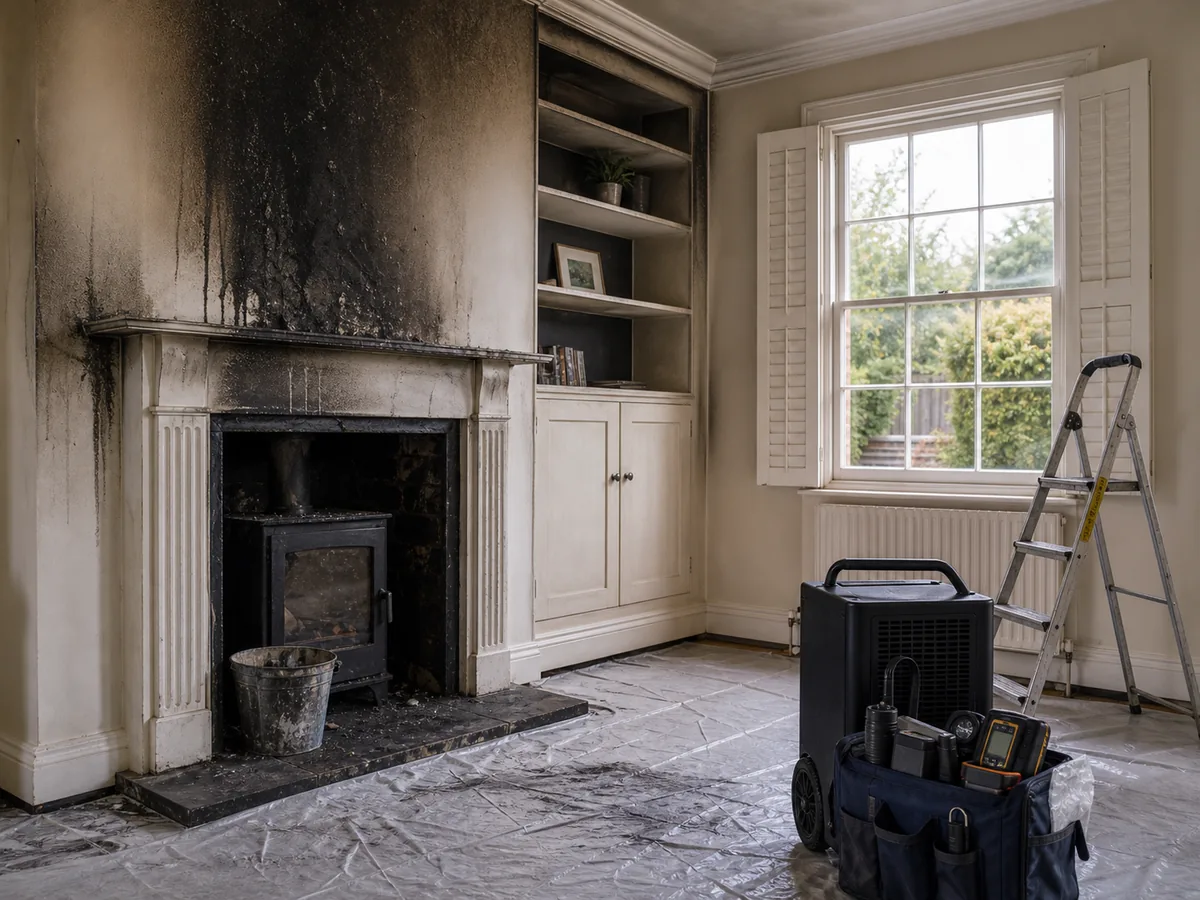
A systematic assessment should separate different forms of damage. Direct heat or flame may affect structural members and finishes; smoke and soot may contaminate adjacent spaces; firefighting water can saturate plasterboard, insulation, floors and joinery; and emergency access may create additional openings.
Structure and building fabric
Where structural elements show distortion, cracking, charring or other significant damage, obtain appropriate structural advice before removal or loading. Roof coverings, external walls and openings should also be checked for weather-tightness.
Services
Electrical, gas, heating and other services affected by fire, heat or water require assessment by suitably competent specialists before being returned to use. Do not conceal damaged services behind new finishes.
Smoke and soot
Smoke deposits can spread beyond visibly burnt areas and may leave odour or contamination on porous surfaces. The appropriate cleaning or removal method depends on the material and severity. Test areas and specialist restoration advice may be appropriate rather than applying paint directly over contamination.
3. Strip-out, cleaning and drying
Strip-out should be controlled by the repair strategy, not by an assumption that everything affected must be removed. Record what is being taken out and why. Where asbestos could be present, relevant information and surveys must be considered before intrusive work proceeds.
Remove what cannot reasonably be retained
Materials may need removal because of fire damage, contamination, loss of structural integrity or saturation. Other components may be suitable for specialist cleaning or repair. Decisions should consider safety, performance, compatibility and the agreed insurance scope where applicable.
Manage moisture before closing up
Firefighting water and subsequent weather exposure can leave hidden moisture in the building. Drying conditions should be assessed before new finishes enclose affected construction. Reinstating too early can trap moisture and create later defects.
Coordinate waste and hazardous materials
Fire-damaged waste may contain sharp, unstable or contaminated material. Segregation and disposal should follow applicable waste and hazardous-material requirements, using specialist contractors where necessary.
4. Reinstatement and returning the property to use
Once the building is stable, appropriately cleaned and dry, reinstatement can proceed from structure and services through to linings, joinery, finishes and decoration. The repair should address the actual damage rather than simply hiding visible evidence of the fire.
Plan compliance into the repair
Depending on the work, Building Regulations and other requirements may apply. Fire-resisting construction, alarms, electrical work and alterations should be specified and installed appropriately. Larger projects may also require formal design and Principal Contractor coordination.
Sequence trades carefully
Complete structural and service repairs before closing walls and ceilings. Retain photographs of concealed work where useful and obtain relevant test results or certificates. Protect completed areas while later trades finish.
Close out with evidence
At completion, review the agreed scope, outstanding defects and documentation. Keep survey reports, photographs, specifications, insurer approvals where relevant, invoices, guarantees and compliance records together.
DMP Buildtech undertakes Remedial Works, refurbishment and coordinated restoration projects across Hampshire and West Sussex, including the building-work stages that can follow fire damage assessment.
Related services
FAQs
When is it safe to enter a fire-damaged property?
Only after emergency restrictions have ended and relevant hazards have been assessed. Significant structural, electrical, gas or contamination concerns require competent assessment before normal access or intrusive work.
Does all smoke-damaged material need replacing?
Not necessarily. The appropriate response depends on material, contamination and damage severity. Some items may be cleanable; others may require removal.
Why can fire damage cause damp problems?
Firefighting water and weather exposure through damaged roofs or openings can saturate building materials. Drying should be addressed before affected construction is enclosed.
Should soot simply be painted over?
No. Contaminated surfaces should be assessed and appropriately cleaned, treated or removed before decoration; otherwise staining or odour may persist.
Can structural damage be hidden after a fire?
Yes. Heat can affect concealed or partially visible components. Distortion, charring, cracking or suspected loss of capacity should be assessed before reinstatement.
What records should be kept after fire restoration?
Keep surveys, photographs, specifications, approvals, certificates, test results, invoices, guarantees and a record of concealed repairs where useful.
Need help with this type of work?
Send DMP Buildtech a short description and photographs. We can advise on the right inspection, quote or maintenance step.
Request a quote or inspection