
Learning Hub Guide
Why Use Drone Inspections for Property Maintenance
Explore why drone inspections are useful for roofs, gutters, chimneys, commercial units and planned maintenance.
Overview
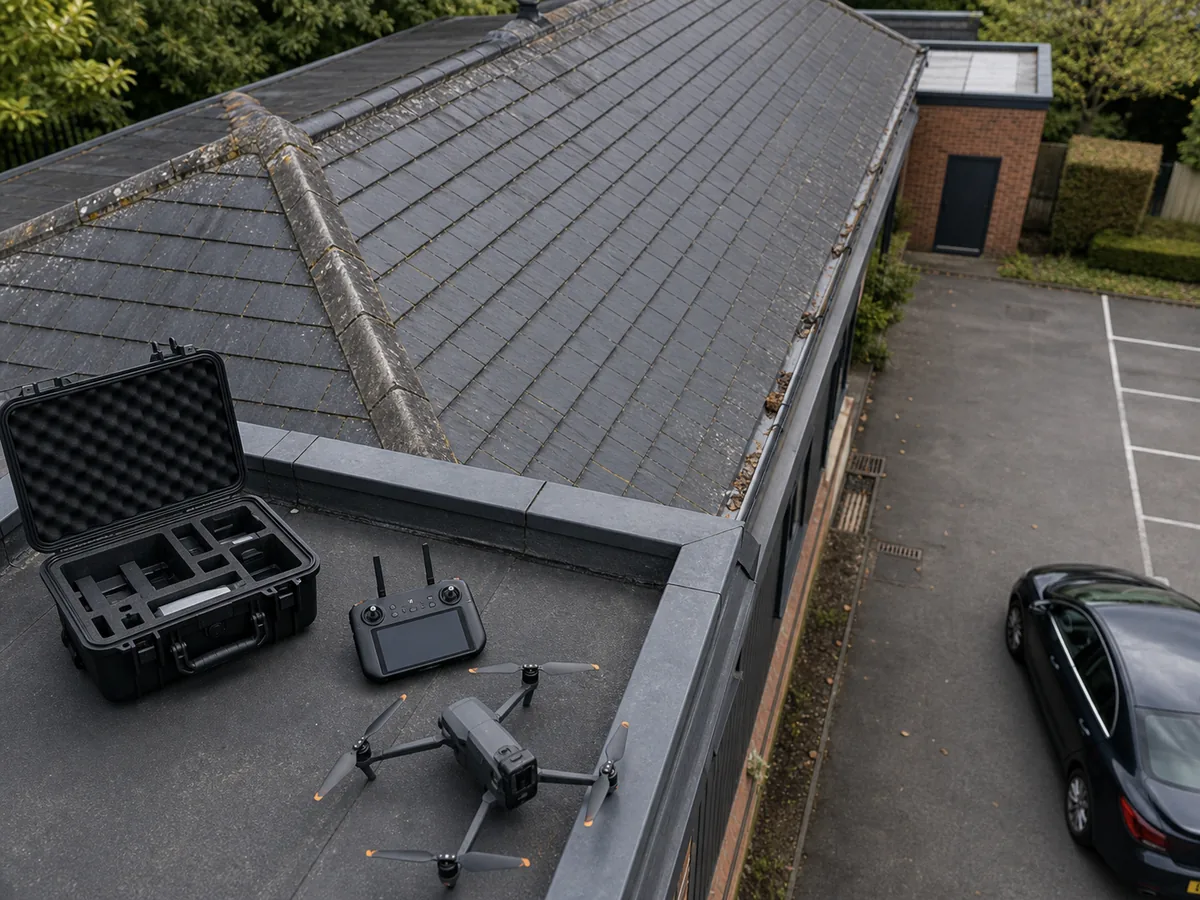
Explore why drone inspections are useful for roofs, gutters, chimneys, commercial units and planned maintenance. This guide provides practical background to help property owners and managers understand the subject, recognise key considerations and decide when professional advice or inspection may be appropriate.
What this guide covers
Find high-level defects and establish condition without unnecessary initial access.
Go to section →Where it helpsRoofs, gutters, chimneys, façades, commercial sites and weather checks.
Go to section →Planning the inspectionMatch the flight and evidence required to the site and maintenance question.
Go to section →From evidence to actionPrioritise repairs, plan access and build a repeatable condition record.
Go to section →1. Why drone inspections are useful in property maintenance
Many property defects begin in places that are difficult to see from ground level. A blocked high-level gutter, displaced roof covering, deteriorated chimney detail or damaged flashing can remain unnoticed until water appears internally. Drone imagery provides a practical way to obtain a closer visual view before deciding whether physical roof access is justified.
This is particularly useful when the question is diagnostic: where is the visible defect, how extensive does it appear, and what access might be needed to repair it? Aerial inspection can reduce guesswork, but it should be treated as evidence rather than a guarantee that every concealed defect has been found.
Better initial access decisions
Scaffolding and powered access are often essential for repair, but they are not always necessary merely to obtain the first overview. Imagery can help determine where safe physical access is actually needed and provide contractors with useful pre-start information.
2. Property-maintenance situations where drones can help
Roof condition and water ingress
Pitched and flat roofs can be checked for visible damage, debris, ponding and problematic junctions. For leaks, imagery should be combined with internal evidence and weather history. Our Drone Roof Surveys Explained guide covers the roof-survey process in more detail.
Gutters, chimneys and high masonry
Aerial views can document some blockages, overflow staining, pointing deterioration, damaged flaunching and flashing details. Where stability is in question, competent physical assessment may still be required.
Commercial and managed property
Larger or inaccessible roof areas can be recorded for maintenance programming and contractor briefing, subject to lawful flight planning. After severe weather, imagery can also identify obvious displaced materials without initially placing somebody on a potentially compromised roof.
3. Planning a useful and lawful inspection
The maintenance objective should drive the flight. A leak investigation requires different images from a periodic condition record. Before flying, identify the areas required, neighbouring property, people, obstacles, airspace, weather and site restrictions.
Choose the operation, not just the drone
Current CAA requirements use aircraft characteristics and the circumstances of the flight to determine the applicable operating route. The operator should check current rules and restrictions for each site rather than assuming that a particular type of property inspection always falls into the same category.
Set an evidence standard
Decide whether the client needs a photograph set, annotated defect report, maintenance priorities or information to scope repair. Consistent location references make imagery much more useful than an unstructured gallery.
4. Using drone evidence to plan maintenance and repairs
Drone imagery becomes most useful when integrated with the maintenance process. Findings should lead to a defined next action: monitor, clean, repair, obtain physical access, investigate internally or seek specialist advice.
Prioritise by consequence
An active leak, loose element over a public route or defect threatening operations deserves a different response from superficial weathering. A report should communicate that distinction without exaggerating certainty.
Plan safe access and build a condition history
Images can help plan scaffolding, powered access or other repair access and identify compatible tasks that could be completed during the same access period. Repeat images can also help demonstrate change over time when kept with maintenance and repair records.
Know when another method is needed
A camera cannot test hidden timber, membrane laps, insulation, fixings or internal roof build-ups. If the defect remains unexplained, combine aerial evidence with safe physical inspection, moisture investigation or targeted opening-up as appropriate.
DMP Buildtech combines Drone Surveys & Reports with Property Maintenance and remedial works so visible findings can feed into practical next steps.
Related services
FAQs
Why use a drone for planned property maintenance?
It can provide repeatable visual evidence of difficult-to-see building areas and help prioritise cleaning, repair or further investigation.
Can drone inspections reduce working at height?
They can remove the need for some initial visual access at height, although safe physical access may still be required for hands-on inspection or repair.
Are drones useful for commercial properties?
Yes. Subject to lawful flight planning, they can help record large or inaccessible roof areas and support maintenance programming and contractor briefing.
Can a drone inspect gutters and chimneys?
It can record visible conditions such as debris, staining, pointing deterioration and some flashing defects, but it cannot test concealed components or structural stability.
Can drone images be used to plan repairs?
Yes. Located and annotated imagery can help define areas of concern and access requirements, although final specifications and quantities may need physical inspection.
Does a drone inspection replace a building survey?
No. It is a visual inspection method for accessible external surfaces and should be combined with other investigation where the question requires physical, structural or concealed-condition assessment.
Need help with this type of work?
Send DMP Buildtech a short description and photographs. We can advise on the right inspection, quote or maintenance step.
Request a quote or inspection