
Learning Hub Guide
Flood Damage Recovery Guide
Understand flood damage recovery, drying, strip-out, repair sequencing and prevention measures after water damage.
Overview
Understand flood damage recovery, drying, strip-out, repair sequencing and prevention measures after water damage. This guide provides practical background to help property owners and managers understand the subject, recognise key considerations and decide when professional advice or inspection may be appropriate.
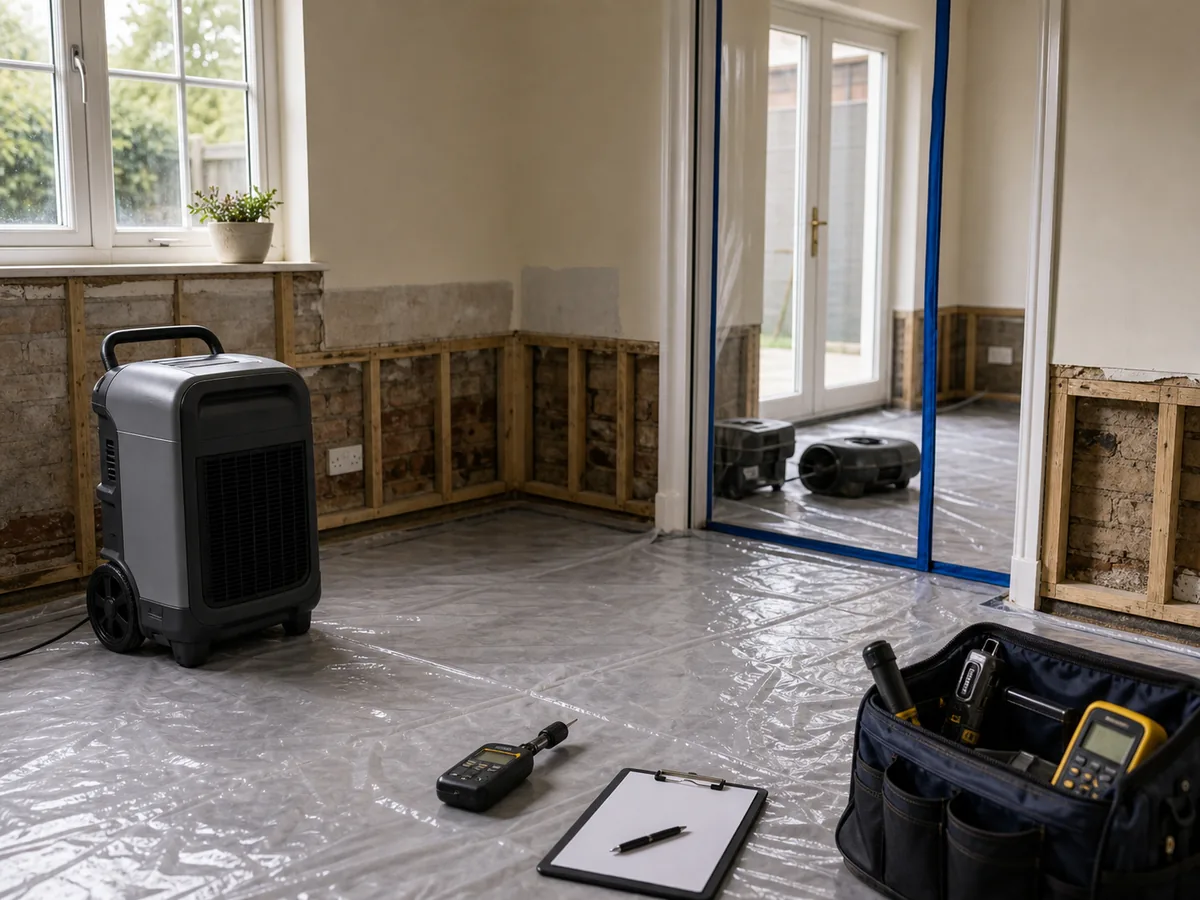
What this guide covers
Safety, contamination, insurance evidence and preventing further damage.
Go to section →Clean & strip outAssess materials before controlled cleaning, removal and decontamination.
Go to section →Drying properlyManage moisture before closing construction or applying new finishes.
Go to section →Repair & resilienceReinstate the building and consider proportionate future flood resilience.
Go to section →1. First response after flooding
Flood recovery begins with safety rather than immediate decoration. Floodwater can contain sewage, chemicals and other contaminants, while wet electrical equipment, unstable finishes and hidden damage can create additional hazards. Do not re-energise affected electrical equipment until it has been appropriately assessed.
Record the extent of damage with photographs and notes and contact the insurer or landlord where applicable before permanent repairs. Where urgent measures are needed to prevent further damage, keep evidence of the condition and work undertaken.
Understand where the water came from
External floodwater, sewer surcharge, burst pipes and rainwater ingress can affect a building differently. Identifying the source helps determine contamination risk, the extent of investigation and what must be corrected before reinstatement.
Protect people during clean-up
Current UK public-health guidance warns that floodwater may contain harmful pollutants and recommends appropriate protective clothing during clean-up. Cleaning methods should be matched to the surface and level of contamination rather than treating every material in the same way.
2. Cleaning, inspection and controlled strip-out
Once standing water has been removed and the area is safe to work in, inspect finishes, insulation, timber, floor build-ups, cavities and services according to the extent of exposure. Some materials can be cleaned and dried; others may have lost integrity or be too contaminated to retain.
Do not strip everything automatically
Removal should have a reason: contamination, physical deterioration, inability to dry effectively or the need to access concealed construction. Unnecessary strip-out increases cost and can damage older or significant fabric.
Check services and concealed areas
Electrical wiring, equipment and appliances affected by flooding should be assessed by an appropriately competent electrician before reuse. Voids and layered floor or wall construction may hold moisture after visible surfaces appear dry.
3. Drying the building before reinstatement
Drying is a process, not a single reading. Heating, ventilation and dehumidification can all contribute, but the method should suit the construction and conditions. Government flood-recovery guidance notes that dehumidifiers can aid drying after floodwater has receded and stresses safe use of heating equipment because of carbon-monoxide risk.
Measure progress
Keep records of drying conditions and moisture observations where useful. Materials dry at different rates and concealed layers can lag behind exposed surfaces. New impermeable finishes applied too early can trap moisture and create later defects.
Traditional buildings need particular care
Older solid-wall and traditionally constructed buildings often manage moisture differently from modern cavity construction. Repair and drying strategies should avoid unnecessarily sealing moisture into historic fabric.
4. Reinstatement and future resilience
Reinstatement should start only when the cause has been controlled, contaminated materials dealt with and the building is suitably dry for the proposed repair system. Sequence structural repairs and services before linings, joinery and decoration.
Repair the cause as well as the damage
Where flooding exposed defects in drainage, thresholds, external levels or rainwater management, consider whether practical improvements can reduce future risk. Flood-resilience measures should be appropriate to the source and building rather than added indiscriminately.
Keep completion evidence
Retain photographs, drying records, reports, specifications, insurer approvals where relevant, invoices, certificates and guarantees. These provide a useful history if moisture symptoms reappear.
DMP Buildtech provides Remedial Works, property repairs and coordinated reinstatement across Hampshire and West Sussex.
Related services
FAQs
Is floodwater safe to clean up myself?
Floodwater can contain sewage and other contaminants. Follow public-health guidance, use suitable protective equipment and obtain specialist help where contamination, structural damage or other hazards are significant.
When can flooded electrics be turned back on?
Affected electrical wiring, equipment and appliances should be appropriately assessed before reuse. Do not energise wet or flood-damaged equipment simply because visible water has gone.
Does all wet plasterboard or insulation have to be removed?
Not automatically. Retention depends on contamination, damage, material type, ability to dry and the construction. The decision should follow inspection rather than a blanket rule.
How do I know when a flooded building is dry enough to repair?
Drying should be assessed over time and in the relevant materials, including concealed layers where necessary. Surface appearance alone is not a reliable indicator.
Can dehumidifiers be used after flooding?
Yes, once floodwater has receded they can aid drying. Equipment must be used safely and electrical systems should be suitable for use.
Should flood repairs include future resilience measures?
Where proportionate, the repair stage is a good opportunity to consider drainage, thresholds, materials or other measures that reduce the consequences of a future event.
Need help with this type of work?
Send DMP Buildtech a short description and photographs. We can advise on the right inspection, quote or maintenance step.
Request a quote or inspection