
Learning Hub Guide
Listed Building Repairs Explained
A practical introduction to listed building repairs, consent, traditional materials and careful project planning.
Overview
A practical introduction to listed building repairs, consent, traditional materials and careful project planning. This guide provides practical background to help property owners and managers understand the subject, recognise key considerations and decide when professional advice or inspection may be appropriate.
What this guide covers
Understand what is special and establish permissions before changing it.
Go to section →Repair firstRetain sound historic fabric and use compatible materials and methods.
Go to section →Common repair workRoofs, masonry, lime mortar, timber, windows and moisture defects.
Go to section →Project controlRecord, specify and coordinate heritage work carefully from start to finish.
Go to section →1. Understand significance and consent before repair
A listed building is protected because of its special architectural or historic interest. The starting point for repair is therefore to understand which materials, details, alterations and parts of the building contribute to that significance before deciding what to remove or change.
In England, Listed Building Consent is required for alterations, extensions or demolition that affect the building’s character as a building of special architectural or historic interest. Historic England advises owners to check with the local planning authority where there is uncertainty. Unauthorised works can be a criminal offence.
Maintenance, repair and alteration are not the same thing
Routine maintenance and genuinely compatible like-for-like repair may not require Listed Building Consent, but the boundary is fact-specific. Historic England’s guidance says like-for-like means physically and visually compatible work and warns that, where there is doubt, owners should check with a specialist adviser or the local planning authority before proceeding.
Listing can extend beyond the obvious façade
Protection is not limited to the front elevation or attractive features. Interior fabric and some structures within the curtilage may also be relevant. Do not assume that an internal alteration is outside listed-building control simply because it cannot be seen from the street.
2. Repair before replacement
Historic England promotes a repair-first approach because unnecessary replacement can remove the very fabric that gives an older building its character and significance. Sound material should normally be retained where practicable, with localised repair focused on failed areas.
Match performance as well as appearance
Compatible repair is about more than colour. Materials should be considered for composition, permeability, strength, texture, dimensions and how they weather alongside the existing building. A visually similar modern product can behave very differently from traditional fabric.
Do not copy an inappropriate previous repair
“Like for like” should not mean reproducing a harmful modern intervention merely because it is already present. Cement-rich pointing, impermeable coatings or unsuitable replacement details may need a conservation-led correction rather than duplication.
3. Common listed-building repair considerations
Masonry and lime mortar
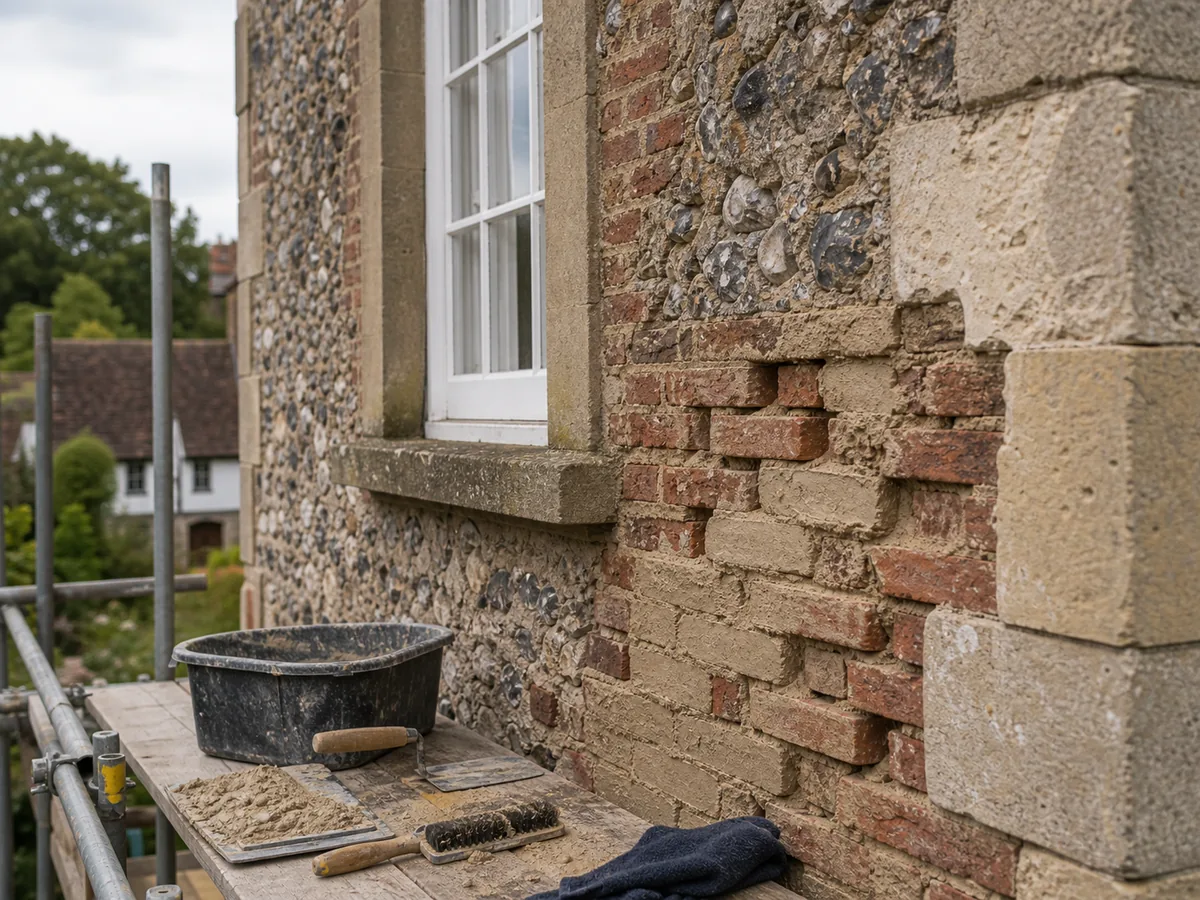
Traditional masonry often relies on relatively permeable mortar and finishes to manage moisture. Repointing should use an appropriate mortar and joint profile, with careful removal that avoids damaging brick or stone arrises. Our Lime Mortar and Heritage Brickwork Guide covers this in more detail.
Roofs and rainwater goods
Early maintenance of coverings, flashings, gutters and downpipes can prevent substantial decay below. Retain serviceable tiles or slates where appropriate and understand the existing roof before wholesale replacement. Changes to material, detailing or appearance may require consent.
Windows, doors and joinery
Historic windows and doors often contain repairable material. Localised timber repairs, overhaul and compatible decoration can retain more significance than replacement. Altering glazing, profiles or complete units may affect character and should be considered with the conservation authority where necessary.
Damp and moisture
Avoid assuming that a modern damp-proofing product is automatically appropriate. First investigate roofs, rainwater goods, external levels, drainage, ventilation, plumbing and incompatible finishes. Traditional solid walls need repair systems compatible with how the construction manages moisture.
4. Planning and delivering heritage repairs
Good heritage work depends on the quality of the investigation and specification before site work starts. Record existing details with photographs and drawings where useful, identify what is to be retained, repaired or replaced and agree samples or trial areas for sensitive work.
Use suitable experience
Designers, surveyors and contractors should have competence appropriate to the building and work. Traditional lime work, historic joinery and conservation repairs require different judgement from routine modern replacement.
Expect discoveries
Opening-up can reveal earlier construction, decay or historic features that were not visible beforehand. Stop and review significant discoveries rather than automatically continuing with the original scope. Consent or specification may need to be revisited.
Keep a permanent record
Retain approvals, specifications, photographs, samples, product information and records of concealed work. This helps future owners understand what was changed and why.
DMP Buildtech undertakes Building & Refurbishment, restoration and remedial work across Hampshire and West Sussex, including traditional buildings where the project scope and required permissions are clearly established.
Related services
FAQs
Do all repairs to a listed building need Listed Building Consent?
No. Routine maintenance and genuinely compatible like-for-like repairs may not require consent, but the position depends on whether the work affects the building’s special interest. Check with the local planning authority where there is doubt.
Can I replace old windows in a listed building with modern units?
Replacement can affect special interest and may require Listed Building Consent. Repair of historic windows should normally be considered first, with proposed changes discussed with the conservation authority where appropriate.
Does listed status only protect the outside of a building?
No. Listed-building protection can apply to the building as a whole, including interior fabric, and can also be relevant to some structures within its curtilage.
What does like-for-like repair mean on a historic building?
It means more than visual similarity. Compatible materials and work should consider physical properties, appearance, detailing and how the repair interacts with surviving historic fabric.
Is cement mortar suitable for listed brickwork?
Not automatically. Mortar must be compatible with the masonry and existing construction. Many traditional buildings require an appropriately specified lime-based mortar rather than a hard cement-rich mix.
What happens if unexpected historic fabric is uncovered during work?
Protect it and review the scope before continuing. Significant discoveries can affect the repair specification and may require advice or further consent.
Need help with this type of work?
Send DMP Buildtech a short description and photographs. We can advise on the right inspection, quote or maintenance step.
Request a quote or inspection