
Learning Hub Guide
Lime Mortar and Heritage Brickwork Guide
Learn why lime mortar matters in older buildings and how heritage brickwork should be approached.
Overview
Learn why lime mortar matters in older buildings and how heritage brickwork should be approached. This guide provides practical background to help property owners and managers understand the subject, recognise key considerations and decide when professional advice or inspection may be appropriate.
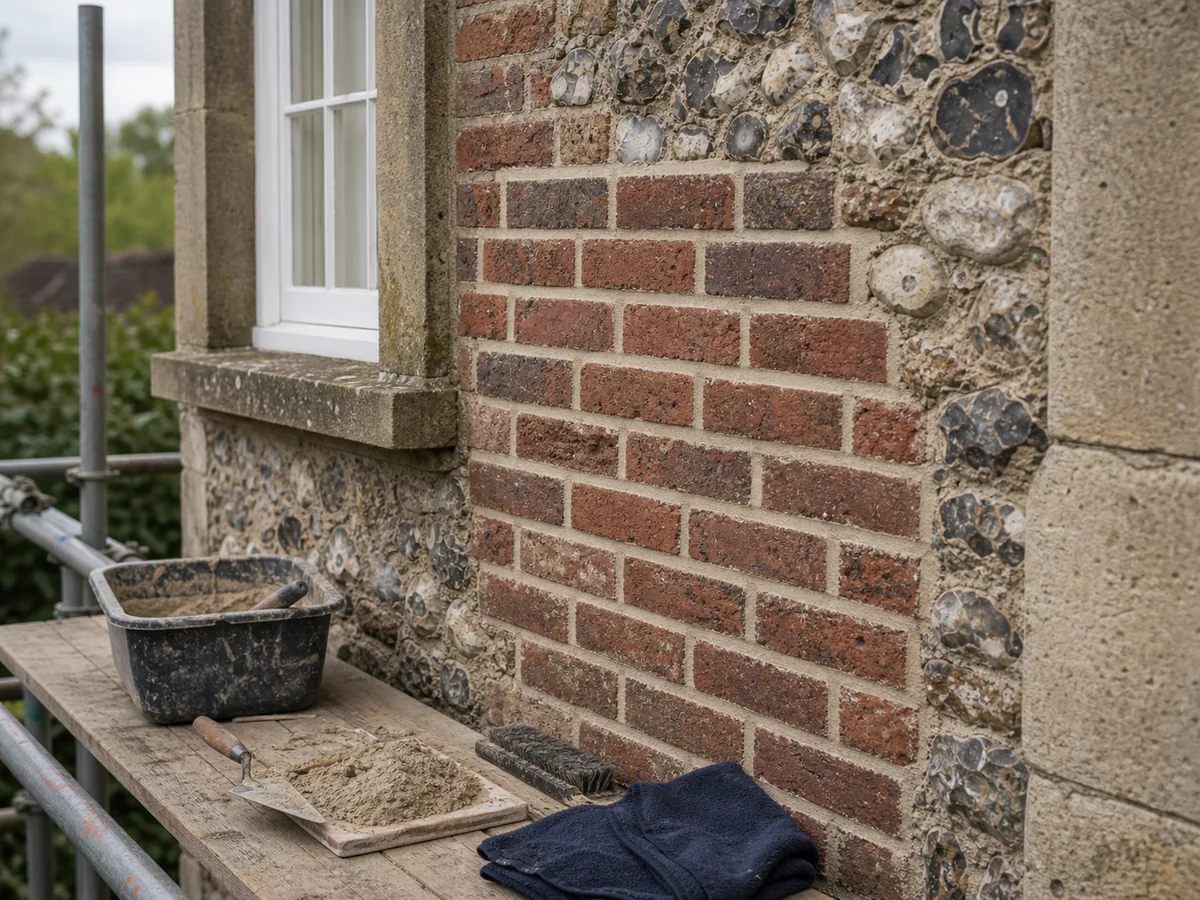
What this guide covers
Understand permeability, movement and why mortar should suit historic masonry.
Go to section →Diagnose firstIdentify mortar, brick condition and previous incompatible repairs before repointing.
Go to section →Repoint properlyCareful preparation, appropriate mortar, joint finishing and curing.
Go to section →Repair brickworkRetain sound fabric and replace or repair only where deterioration requires it.
Go to section →1. Why lime mortar matters in traditional masonry
Many older brick and stone buildings were constructed with lime-based mortars and relatively permeable wall finishes. The mortar is part of the way the wall manages moisture and movement, not simply a material filling the joints.
Historic England advises that replacement mortar should be compatible with the masonry and existing construction. A mortar that is excessively strong, dense or impermeable can shift weathering and moisture stress into softer bricks or stone, increasing the risk of damaged arrises, spalling and trapped moisture.
Mortar should usually be sacrificial to the masonry
In traditional construction, it is generally preferable for weathering to occur in a repairable mortar joint rather than in irreplaceable historic brick or stone. This does not mean choosing an arbitrarily weak mix: exposure, masonry type, joint width and existing fabric all influence an appropriate specification.
Lime is not one single product
Air lime, natural hydraulic lime and formulated mortars behave differently. The correct choice depends on the building and exposure. Copying a generic mix ratio from another property is not a reliable specification.
2. Diagnose the wall before choosing a mortar
Before repointing, inspect the existing mortar, masonry, moisture exposure and previous repairs. Determine whether joints genuinely need work or whether local repair is enough. Wholesale removal of serviceable historic mortar can cause more harm than benefit.
Look for incompatible previous repairs
Hard cement-rich pointing may stand proud while adjacent brick faces erode. Impermeable coatings can also change moisture behaviour. Removal needs care because aggressive cutting can damage the edges of old bricks and permanently widen joints.
Find the moisture source
If masonry is persistently wet, investigate gutters, downpipes, roof junctions, external levels, drainage and defective finishes before relying on repointing to solve the symptom. Our Damp Diagnosis Guide explains the wider diagnostic process.
3. Preparing, repointing and curing historic brickwork
Good repointing is workmanship-intensive. Defective mortar should be removed to an appropriate depth without damaging masonry. Joints are cleaned and prepared before new mortar is compacted properly rather than smeared thinly over the surface.
Match the joint character
Joint profile, texture and aggregate affect both appearance and weathering. The objective is not to make an old wall look unnaturally new. Trial panels are valuable on prominent or sensitive elevations because colour changes as lime mortar cures and dries.
Protect fresh lime work
Lime mortars need suitable curing conditions. Rapid drying, strong sun, wind, heavy rain and frost can damage fresh work. Timing and protection therefore form part of the specification, particularly on exposed Hampshire and West Sussex properties.
4. Repairing damaged heritage brickwork
Retain sound original masonry wherever practicable. Localised repairs may be preferable to widespread replacement. Where bricks are too deteriorated to remain, replacements should be selected for compatible size, colour, texture, durability and physical performance rather than appearance alone.
Avoid unnecessary cosmetic replacement
Historic brickwork naturally varies. Weathering and small imperfections are not automatically defects. Replacement should be driven by condition and performance while respecting the character of the building.
Listed and conservation buildings
Where a building is listed, changes affecting its special architectural or historic interest can require Listed Building Consent. Even apparently simple masonry work can alter character through mortar colour, joint profile or brick replacement. See our Listed Building Repairs Explained guide and check with the local planning authority where consent is uncertain.
DMP Buildtech undertakes Building & Refurbishment, restoration and remedial work across Hampshire and West Sussex.
Related services
FAQs
Why is hard cement mortar a problem on some old brickwork?
If mortar is substantially harder or less permeable than the surrounding masonry, weathering and moisture stress can be transferred into softer historic brick or stone.
Does every old building need lime mortar?
No. The existing construction, masonry, exposure and historic mortar should be assessed before specifying a repair mortar.
Can I repoint only the visibly failed areas?
Often localised repair is preferable where surrounding historic mortar remains sound. Wholesale removal of serviceable mortar can unnecessarily damage historic fabric.
How should new lime mortar be protected?
Fresh work needs suitable curing and protection from rapid drying, strong sun, wind, heavy rain and frost according to the mortar and conditions.
Should replacement bricks match only by colour?
No. Size, texture, durability and physical compatibility with the existing masonry are also important.
Does repointing a listed building need consent?
It can if the work affects the building’s special interest. Mortar composition, colour, joint profile and replacement masonry can all alter character, so check with the local planning authority where uncertain.
Need help with this type of work?
Send DMP Buildtech a short description and photographs. We can advise on the right inspection, quote or maintenance step.
Request a quote or inspection